


Many people assume that a cutting board is just a simple kitchen tool, but in reality, it plays a crucial role in food safety and the cooking experience. Choosing the right cutting board not only protects your knives but also effectively prevents bacterial growth, ensuring food hygiene. So, which cutting board should you choose when cutting meat? This article will detail the characteristics of various cutting boards to help you make an informed decision.
Cutting boards on the market come in a variety of materials, each with its unique characteristics and applications. Here are some common types of cutting boards and their features:
Wooden Cutting Boards: Classic and Durable, Suitable for Heavy Use
Wooden cutting boards are favored by many for their durability and aesthetics, especially suitable for occasions requiring frequent chopping. Their advantages include:
- Possess a certain elasticity, reducing knife blade wear
- Natural material, less prone to bacterial growth
- Sturdy texture, suitable for cutting large pieces of meat
However, wooden cutting boards require regular maintenance to avoid prolonged dampness, which can lead to mold or deformation.
Bamboo Cutting Boards: Eco-friendly and Lightweight, Suitable for Daily Use
Bamboo cutting boards are popular for their lightness and eco-friendliness. Their advantages include:
- Lower water absorption compared to wooden cutting boards, less prone to mold
- Moderate texture, won't excessively wear down knife blades
- More affordable, suitable for general household use
However, bamboo cutting boards are harder, which may cause some wear and tear on knives, and if used improperly, cracks may appear.
Plastic Cutting Boards: Lightweight and Easy to Clean, Suitable for Hygiene Management
Plastic cutting boards are the choice of many professional kitchens because they are easy to clean and less likely to retain bacteria. Their features include:
- Dishwasher safe, easy to clean
- Lightweight, easy to move and store
- Some plastic cutting boards have an antimicrobial coating, reducing the risk of bacterial growth
However, plastic cutting boards are prone to knife marks and may need to be replaced after prolonged use to prevent bacteria from hiding in the grooves.
Recommended Korean Cutting Boards
Mari Steiger Double-Sided Stainless Steel Cutting Board
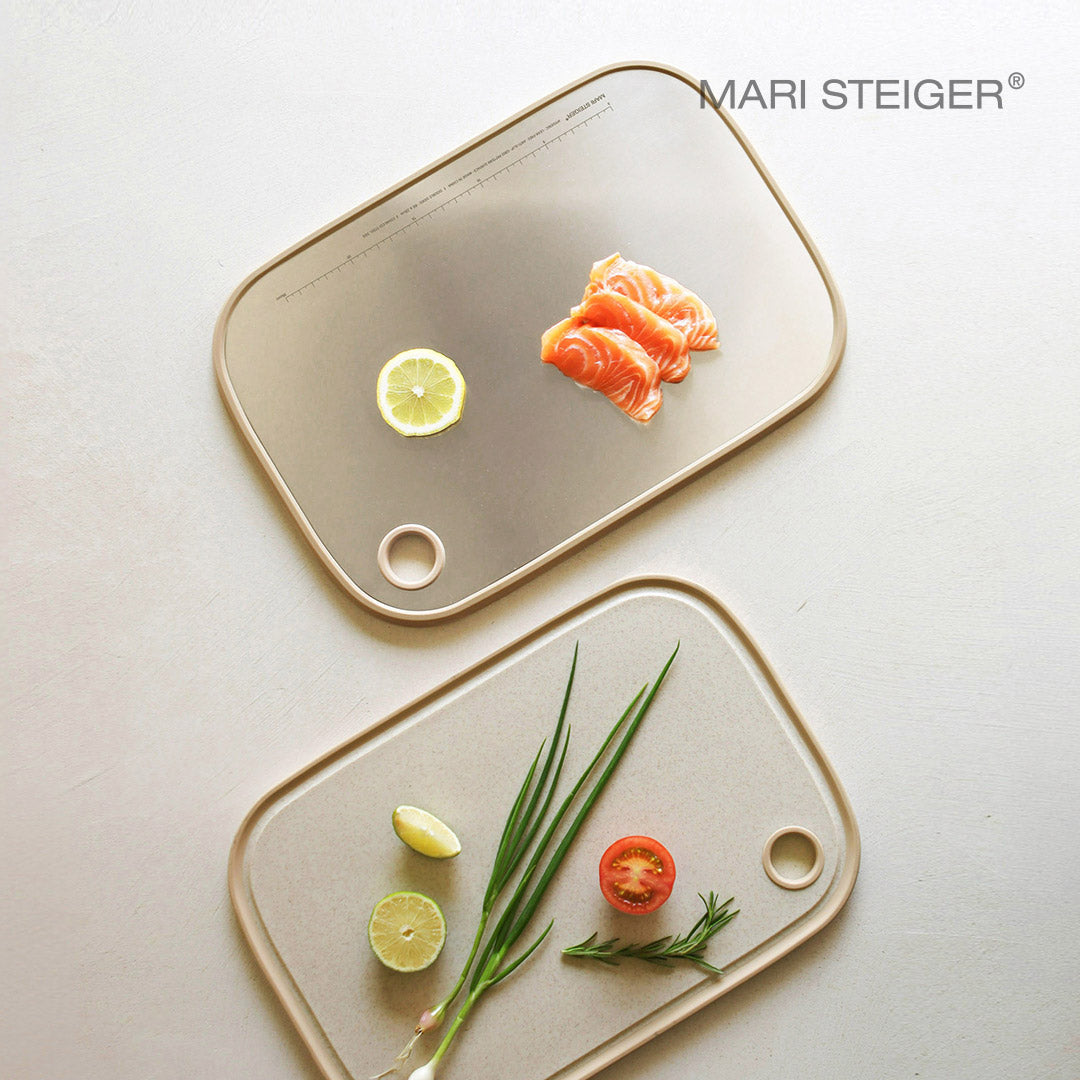
- Double-sided functionality: One side features SUS304 stainless steel, offering antibacterial and durable properties, while the other side is food-grade PP, suitable for various ingredients.
- Rounded corner design: Smooth edges with no sharp corners ensure safe and comfortable use, and easy cleaning.
- Lightweight and portable: Built-in hanging hole design for convenient storage, saving kitchen space.
- Non-slip base: TPR material bottom provides stable support, making cutting more secure.
Neoflam Wood Fiber Seaweed Cutting Board (Large)
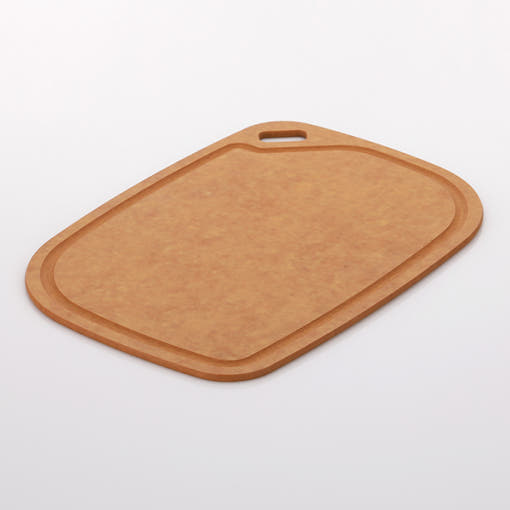
- Made from natural wood fiber, eco-friendly and healthy.
- Knife marks are less likely to remain; the surface is durable and resistant to cuts.
- Possesses natural antibacterial properties, suitable for daily use.
- Lightweight, easy to carry and clean.
Korean Locknlock Double-Sided Antibacterial Cutting Board (Three Sizes)

- Double-sided design: Antibacterial side and bamboo side to prevent cross-contamination.
- Non-slip base design enhances safety during use.
- Patented antibacterial protection technology effectively inhibits bacteria, mold, and odor.
- Available in three sizes to suit various needs.
Neoflam Flutto Series Bamboo Cutting Board Purple (Large) Blue (Small)
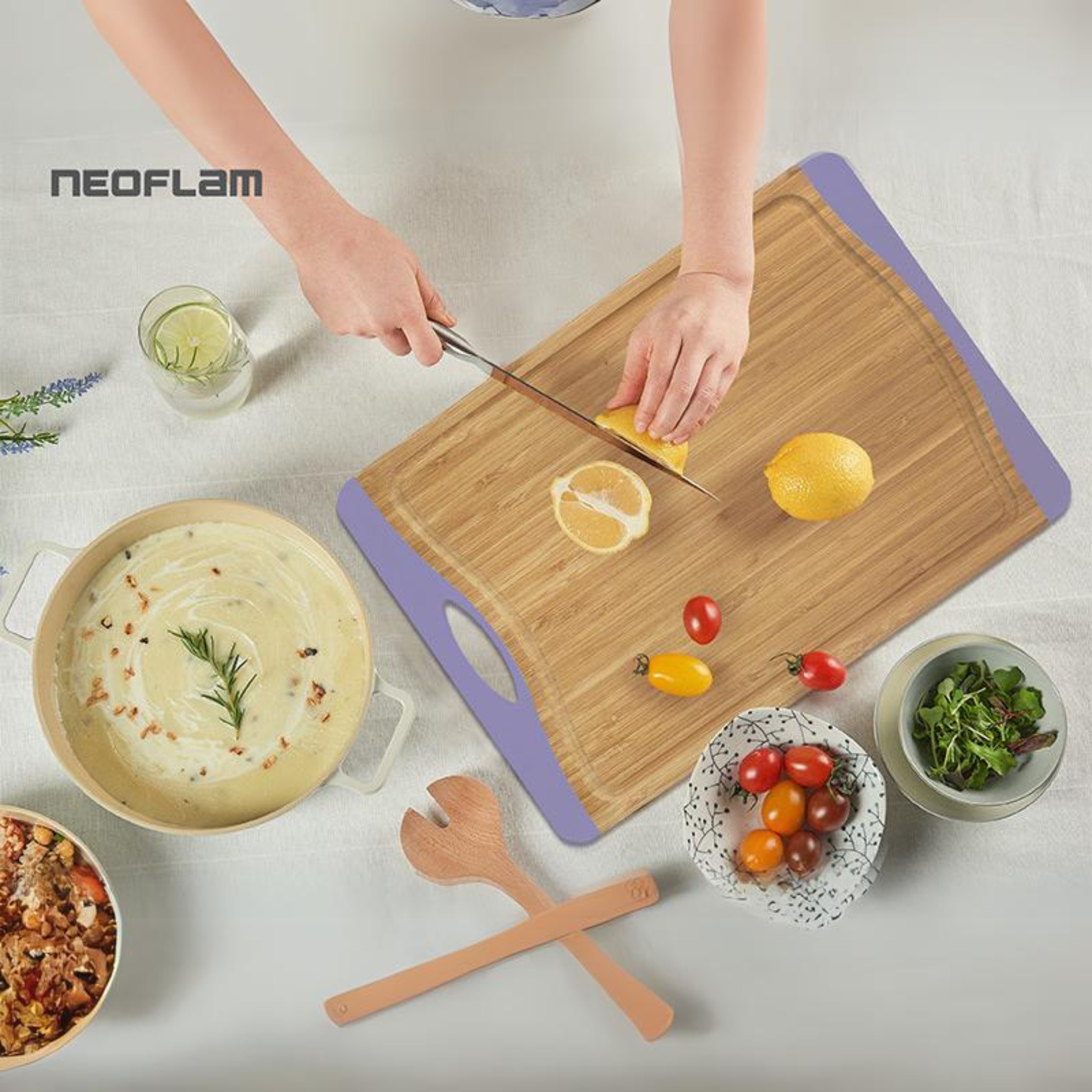
- High-density, non-porous bamboo cutting board surface does not absorb water.
- Designed for double-sided use, effectively preventing food cross-contamination.
- Three-layer construction reduces weight while maintaining durability.
- Equipped with a juice groove and non-slip strip for more convenient use.
Conclusion: Choose the Right Cutting Board to Enhance Your Kitchen
Whether you're a kitchen pro or a home cooking novice, a suitable cutting board is a crucial element for protecting food safety and enhancing your cooking experience. Wooden and bamboo cutting boards are ideal for those who enjoy extensive chopping, while plastic and glass cutting boards are better for users who prefer minimal maintenance.
More importantly, ensure that each cutting board is effectively used and cleaned to prevent food cross-contamination and bacterial buildup. If you have higher demands for your kitchen, consider adding a dedicated meat-cutting board for more precise handling of various ingredients.
In conclusion, choosing the right cutting board is not just about convenience, but also about health and food safety. A good cutting board can make your culinary life more comfortable and enjoyable!

